Trademark
June 24, 2025
By Emily Poler
Last year I wrote about the dispute between two social media influencers that came to be known as the “Sad Beige” lawsuit, because it involves a dispute in which influencer Sydney Nicole Gifford sued rival Alyssa Sheil, alleging Sheil was replicating her “neutral, beige, and cream aesthetic” to promote the same aggressively minimalist products on TikTok, Instagram and their Amazon storefronts. (As an aside, I was blissfully unaware of Amazon Storefronts until this lawsuit. One of the things I love about writing this blog is that I learn about all sorts of stuff, whether useful to me or, in this case, not.) Due to the unprecedented and ultra-modern nature of the suit — can one copyright a “vibe”? — and its potential impact on the countless influencers who earn their livings based on their own aesthetics, the case got a lot of press and an amusing, snarky moniker. And, recently, a resolution.
To sum up, both Sheil and Gifford have amassed hundreds of thousands of social media followers by posting photos of themselves promoting home, fashion and beauty products in neutral colors that are sold on Amazon. The two met a few times in 2023 to discuss a potential collaboration, after which Sheil ghosted Gifford and blocked her from viewing her socials. At that point, according to Gifford, Sheil began copying her posts, shilling the same or similar Amazon products and replicating Gifford’s poses, hairstyles, camera angles and fonts — all of which, Gifford alleged, equaled her minimalist, “beige” aesthetic. In 2024, Gifford sued Sheil for trade dress infringement, tortious interference, vicarious copyright infringement, misappropriation of likeness, and violation of the Digital Millennium Copyright Act.
Sheil moved to dismiss these claims on numerous grounds. The District Court, for the most part, rejected Sheil’s arguments, dismissing the claim for tortious interference while allowing the rest of Gifford’s complaint to proceed. In late May, though, Gifford voluntarily dismissed all claims against Sheil with prejudice, with Sheil’s consent. (For the non-litigators and non-lawyers out there, generally, once a defendant answers a complaint, both parties’ consent is required for dismissal.) Following this anti-climactic (dare I say, “neutral”) conclusion, both sides posted on TikTok to explain the situation to their followers. For her part, Gifford claimed that she had agreed to dismissal because litigation is “prohibitively expensive” and she wanted to focus her time on her “business and growing family.” Sheil, meanwhile, proclaimed total victory. As her attorneys put it, “Ms. Gifford took nothing on her claims, proving — as Ms. Sheil has always alleged — that they were completely frivolous.”
What are the takeaways here? For me, there are two different types — some that apply to litigation generally and some relevant to this specific litigation, highlighting the complex interplay between social media influencers and existing intellectual property laws.
On litigation generally:
- Litigation is expensive. Sometimes the expense is necessary to vindicate or defend a right but, as Gifford found out, it can be a lot more than you can afford (or can hope to receive in victory).
- Litigation takes a long time and can be a real slog. Again, sometimes it is necessary, but it can be emotionally draining and suck up time that most people would prefer to devote to something else.
- Not everything that feels wrong can be made right by litigation. No doubt, Gifford was upset by the fact that Sheil appeared to be copying her posts and overall look; she probably felt violated and frustrated every time she saw one of Sheil’s posts. However, litigation isn’t necessarily going to make her less upset even if, ultimately, she won and Sheil was forced to change her aesthetic. Of course, if Gifford lost, she would have spent a lot of money and likely been angrier than ever.
On the relationship between social media content and existing IP law:
- At a high level, copyright law encourages creators to invest time in creating new works because those works benefit society. Speaking for myself, it’s really hard to see how the material created by these influencers positively benefits society. I realize I’m being judgmental, but social media is overflowing with so much content like Gifford’s and Sheil’s, and so much of it is so similar, that I don’t see how rewarding its creation through the grant of a copyright encourages or benefits society.
- Similarly, trademark law encourages people to invest time and money in ensuring that consumers link products with a particular source so as to prevent consumer confusion over the source of a particular good or service. Here, one way to look at what Gifford and Sheil do is that they provide a service that assists customers to identify things they might want to buy. However, as it appears that a lot of the products they each promote are really just items that Amazon wanted them to promote, I have questions about whether what they do actually furthers the purpose of trademark law.
Putting aside the legal aspects of this much publicized (and ridiculed) case, it does strike me as ironic that both women promote a minimalist aesthetic through encouraging people to buy a cheap stuff on Amazon. I see a real contradiction there, like preaching the way to achieve a Zen-like state of grace is by endlessly shouting at strangers. But hey, maybe that’s just me (although I don’t think so).
January 7, 2025
I talk a lot about trademarks here, but do you know exactly what one is? Well, according to the United States Trademark Office, a trademark is something that “Identifies the source of your goods or services.” Put another way, it’s anything — a logo, a word, a swoosh — that tells buyers who made the merchandise on which it appears.
So, who made this stuff?
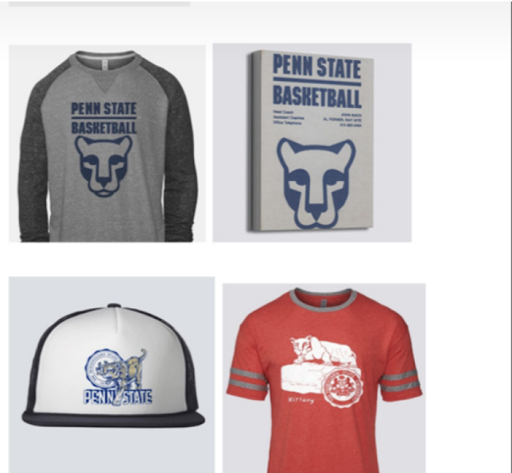
Penn State, right? No! These items were sold by a company called Vintage Brand, which insists it has every right to do so despite not being affiliated in any way with the university in State College, Pennsylvania.
Next (and obvious) question: WTF?!
Vintage Brand claimed its use of these designs and others, which were taken from (appropriately) vintage Penn State materials featuring the school’s Nittany Lion trademark, didn’t infringe on Penn State’s trademarks for a couple of reasons. First, it claimed that these Penn State designs were just there for decoration; they weren’t intended to inform consumers that the apparel and accessories were made and sold by Penn State. Vintage Brand further asserted these designs were merely functional, because they allowed people to express support for or affiliation with Penn State, and thus were not a trademark use. Finally, Vintage Brand said there was no way consumers would be confused (the central inquiry in trademark infringement) as to who made the merch because Vintage Brand’s website included disclaimers saying that it was not affiliated with Penn State (sure, everybody reads the fine print).
Unsurprisingly, Penn State did not see things this way and, in 2021 it sued Vintage Brand for trademark infringement, accusing the company of being a “serial infringer,” and seller of “counterfeit” goods. Penn State lawyers argued that consumers would mistake the fakes for official Penn State merchandise, diluting their trademarks and reducing their value and exclusivity, while also taking revenue that should have otherwise gone to the university. Other schools, including Purdue and Stanford, also sued on similar grounds, but Penn State’s case was the first to go to trial.
As the case progressed, Vintage Brand continued to insist its use of Penn State’s marks was permissible because the designs were solely ornamental and functional. While they did not dispute that their merchandise included properly registered trademarks that belong to Penn State, Vintage Brand said its designs were independently recreated from vintage artwork to celebrate nostalgia and history and that any resemblance between its designs and Penn State’s trademarks was coincidental and not likely to cause confusion among consumers.
In response, Penn State pointed out that if consumers couldn’t tell what products originated with Penn State and what products originated with Vintage Brand (or someone else) that was, pretty clearly, trademark infringement.
The judge allowed Vintage Brand’s defenses to stand and the case was tried in front of a jury in November, 2024. The jury found in favor of Penn State and, while they only awarded the school a little more than $25,000 in damages, the victory was far more valuable in the continued trademark protection it extended to Penn State and other universities that sell branded merchandise.
Seems weird there was even enough here for a judge to send the case to a jury, right? Well, there’s actually some precedent for companies successfully defending similar trademark infringement claims. This dates back to the 1970s when the National Hockey League sued a company called Dallas Cap & Emblem for selling knockoff patches of NHL team logos to sporting goods stores. Dallas Cap claimed that the emblems, when attached to clothing by consumers, were functional and served no trademark purpose. The District Court in that case agreed. Even though the District Court’s decision was overturned, the idea that logos can be functional and not identify the source of goods has continued to crop up. But, maybe Penn State’s victory here will put an end to this defense.
filed under: trademark
August 6, 2024
Everything should be clicking (as it were) for TikTok influencer Sydney Nicole Gifford. She has half a million followers who eat up her posts promoting home and fashion items from Amazon, propelling her to the kind of celebrity that garnered coverage in People for her pregnancy. But alas, Gifford is apparently a little too influential.
She claims fellow TikToker Alyssa Sheil is copying her posts and using Gifford’s visual style to promote the same products! And yes, Gifford is now suing Sheil, in a case that could shake up the world of social media influencers and potentially make it harder for influencers to create content without fear of accusations of copying.
According to the complaint, which was filed in District Court in Texas, Gifford “spends upwards of ten hours a day, seven days a week, researching unique products and services that may fit her brand identity, testing and assessing those products and services, styling photos and videos promoting such products and editing posts…” for social media. As a result, according to the complaint, “Sydney has become well-known for promoting certain goods from Amazon, including household goods, apparel, and accessories, through original photo and video works…”
The lawsuit goes on to allege that defendant Sheil “replicated the neutral, beige, and cream aesthetic of [Gifford’s] brand identity, featured the same or substantially [the same] Amazon products promoted by [Gifford], and contained styling and textual captions replicating those of [Gifford’s] posts.” It says at least 40 of Sheil’s posts feature “identical styling, tone, camera angle and/or text,” to Sydney’s. Here’s a pretty obvious one, with Gifford on the left and Sheil on the right.
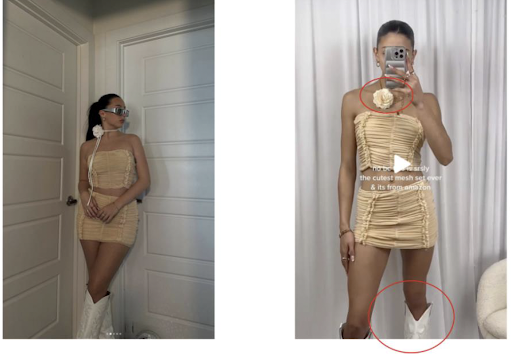
In the suit, Gifford is claiming, among other things, trade dress infringement, violation of the Digital Millennium Copyright Act, copyright infringement (she has registered copyrights for some of her posts and videos), and unfair competition.
Does Gifford have a case? Here’s what I think:
- To prevail on the claim for infringement of her trade dress Gifford will have to establish, at a minimum, that consumers associate her “aesthetic” with her. That may be difficult because, at least to my eye, the style of Gifford’s posts doesn’t seem wildly different from a lot of other influencers. (I am so not her target audience and I’m doing my best not to dunk on her “aesthetic,” but I have to put “aesthetic” in quotes to convey my eyeroll.)
- The claim under the Digital Millennium Copyright Act is based on the fact that Sheil removed Gifford’s name or social media handle from posts. This is, shall we say, a novel argument given that the intent of the DMCA is to prevent people from circumventing digital rights management software. This is not that. At all.
- The copyright claim is going to raise a lot of questions about exactly how original these social media posts are and, as a result, how much protection under copyright law they are entitled to. Gifford and other social media influencers might find out that they don’t like the answer to this question.
- If Gifford is able to establish that consumers associate her “aesthetic” with her, she could win the battle… but lose the war because it might open her up to lawsuits by other influencers who claim that she copied their look.
Meanwhile, Sheil has asked the Court to dismiss Gifford’s case.
Thinking more broadly, a decision or decisions on the copyright claim could have implications for appropriation artists and others who closely copy another creator’s work. Which is one reason it will be fascinating to see how this plays out. And yes, I know I often end these posts saying something like that. Because it’s true! This case, as with so many IP lawsuits lately, especially those that involve AI, are all going where no court has gone before (or even imagined possible ten years ago). Every one of these potential decisions could have massive socioeconomic impact, with a real effect on how a lot of people earn a living and how the rest of us spend a lot (probably too much) of our time.
June 25, 2024
The web is rife with articles explaining the importance of protecting a business’s trademarks. Some of them are even on this blog!
These articles usually (and correctly) point out that if someone is potentially infringing on your business’s trademark, it’s important to send a cease and desist letter or, if necessary, file a lawsuit because if others start to use your mark (or something like it) and the business doesn’t protect it, you can eventually lose trademark protection.
However, sometimes, it might be better not to start the legal ball rolling. I say this even though I’m a litigator, and yes, one of the ways I earn my living is by helping businesses sue for trademark infringement. Why? A couple of recent cases highlight the importance of taking a step back and thinking things through before sending that cease and desist letter or filing a lawsuit.
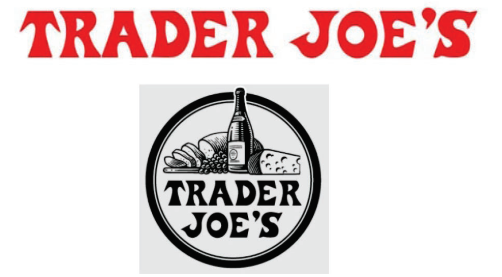
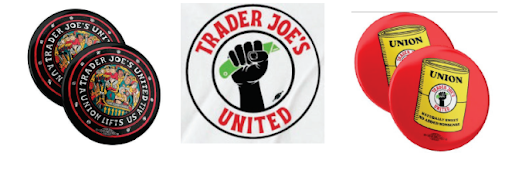
For starters, Trader Joe’s case against its employee union, Trader Joe’s United. The union sells mugs, tee shirts, and other merch branded with their Trader Joe’s United logo to raise money for organizing locations throughout the supermarket chain. Trader Joe’s claimed trademark infringement and sued. For comparison, here are Trader Joe’s marks:
And here’s what the union used:
The District Court granted the union’s motion, writing that it felt “compelled to put legal formalisms to one side and point out the obvious. This action is undoubtedly related to an existing labor dispute. It strains credulity to believe that the present lawsuit — which itself comes dangerously close to the line of Rule 11 — would have been filed absent the organizing efforts that Trader Joe’s employees have mounted (successfully) in multiple locations across the country.” In other words, the Court was saying that the real reason Trader Joe’s sued was to try and shut down the union, and that given the “extensive and ongoing legal battles of the Union’s organizing efforts at multiple stores, Trader Joe’s claim that it was genuinely concerned about the dilution of its brand resulting from [the Union’s] mugs and buttons cannot be taken seriously.” The Court went on to hold that no reasonable consumer would think that the union’s merch originated with Trader Joe’s — the central inquiry in a trademark infringement case. The Court also awarded the union its legal fees, noting in its decision that the case stood out “in terms of its lack of substantive merit . . . .” Ouch.
Famed restaurateur David Chang and his company, Momofuku, also recently lost a trademark battle they probably wish they hadn’t started. On the bright side for Chang and Momofuku, there was no lawsuit, and they weren’t unceremoniously kicked out of court like Trader Joe’s. However, they did have to issue an apology after sending a bunch of cease-and-desist letters to other Asian-American-owned businesses demanding that they cease and desist using the term “Chili Crunch.” (For those of you who mostly stick to milder foods, Momofuku Chili Crunch is a packaged “spicy-crunchy chili oil that adds a flash of heat and texture to your favorite dishes.”)
There was a lot of pushback on these letters from the recipients, who posted them to social media and shared them with mainstream media outlets, highlighting how Chang and Momofuku were trying to assert rights over a generic term frequently used in Asian and Asian-American gastronomic offerings. The companies (rightly) felt that Chang and Momofuku were trying to use their status and financial resources to attack other Asian-American-owned companies unjustifiably.
And then, there’s the case of the Los Angeles Police Foundation, a private group affiliated with the Los Angeles Police Department. It sent a cease and desist letter to a company selling tee shirts emblazoned with the words “Fuck the LAPD” on top of the Los Angeles Lakers logo.
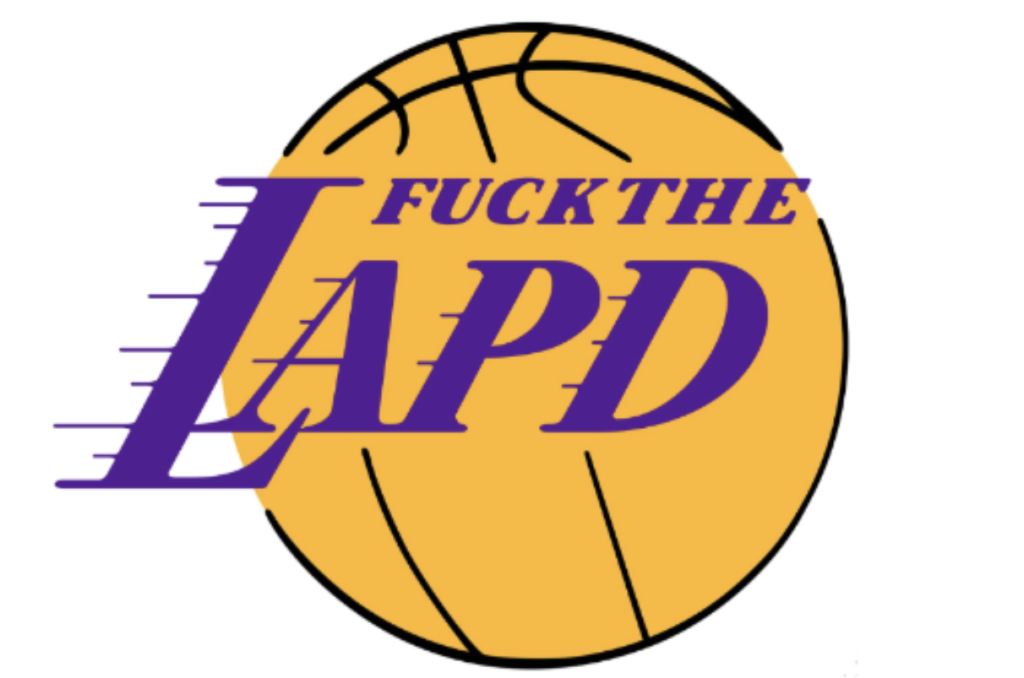
In its letter, the LAPF asserted it is “one of two exclusive holders of intellectual property rights pertaining to trademarks, copyrights and other licensed indicia for (a) the Los Angeles Police Department Badge; (b) the Los Angeles Police Department Uniform; (c) the LAPD motto ‘To Protect and Serve’; and (d) the word ‘LAPD’ as an acronym/abbreviation for the Los Angeles Police Department . . .”
There are a lot of whiffs here for the LAPF. Strike one: Government agencies can’t get trademark protection for their names. Strike two: The LAPF isn’t the LAPD, so they have no basis for claiming infringement on something that isn’t even theirs. Strike three (it’s a doozy): Obviously, the logo on these shirts belongs to the Lakers, not the LAPF. Strike four: It’s fairly safe to assume that the shirt is meant as a parody and/or a political commentary, which are protected under the First Amendment.
Worth noting here is the tee shirt manufacturer’s carefully crafted response to the LAPF after receiving the cease-and-desist letter: “LOL, no.” That was literally the entirety of the tee shirt maker’s response—points for clarity, conciseness, and all-around humor.
What does this all mean? Well, if you send a cease and desist letter or file suit to protect a trademark you don’t actually have (LAPF), or if you’re trying to accomplish a goal that is not related to actually protecting your trademark (Trader Joe’s), you’re just going to be embarrassed. And while the Momofuku matter is more complicated and nuanced, it’s fair to say many companies use the term “Chili Crisp,” making Momofuku’s efforts to trademark it seem like the work of a bully.
So, the lesson here is that legal claims don’t exist in a vacuum. Examine the validity of your claims, but also consider the potential negative publicity and damage to your reputation before firing off cease-and-desists willy-nilly or filing suit. Even if you win in court, sometimes public opinion is the final judge, and no business wants to upset that judge.
June 11, 2024
The long-running dispute between wedding dress designer Hayley Paige Gutman and her former employer JLM Couture over ownership of the social media accounts she created and that bear her name is at last over.
On May 8, the District Court revised its earlier preliminary injunction and restored control of the @misshayleypaige Instagram, Pinterest and TikTok accounts to Gutman. In its decision, the Court held JLM couldn’t establish that the social media accounts belonged to JLM at their inception or that Gutman had transferred ownership to JLM.
In case you’re new to my analysis of the very public case (at least to Gutman’s 1 million-plus followers), I originally wrote about it here and, more recently, here.
How did the District Court reach a conclusion that is 180 degrees from its earlier decisions?
Well, in March 2024 the Second Circuit disagreed with the six-factor test the District Court created to determine ownership of the social media accounts and remanded the case back to the District Court with instructions to look at the accounts as normal property rather than through novel tests (a decision I heartily agreed with). After that, the District Court requested and received additional briefing on whether JLM could show that it either owned the accounts at the time they were created or that ownership was subsequently transferred to JLM, and that Gutman only had access to the social media accounts because she was a JLM employee.
In its analysis, the Court found:
- Gutman opened the Instagram account at the recommendation of a friend;
- She was at least partially motivated to create the accounts for personal use even if she saw them as potentially useful in promoting products manufactured by JLM;
- The Instagram was initially linked to her personal Facebook account;
- The Instagram account wasn’t linked to the JLM Facebook account until four years later; and
- The first five Instagram posts were clearly personal, as were early pins on Pinterest
According to the Court, taken together, these facts showed that Gutman created the accounts for personal use and not solely as a JLM employee, even if she did later use them to promote JLM products, allowed JLM employees access to them, and included links to JLM accounts.
Thus, since JLM couldn’t establish a valid claim to ownership of the social media accounts when they were created, it would have to show that the accounts were transferred to it. It was unable to do this for several reasons including the fact that Instagram’s terms of service prevent a user from transferring an account.
There were a few other interesting factors in the mix. For one, while Gutman’s contract with JLM included licensing her name to JLM for commercial purposes, she retained the right to use her name for non-commercial purposes. Thus, the Court found her use of @misshayleypaige as a handle on social media was not on its own a basis for finding that her social media accounts belong to JLM. And, as the Second Circuit found, the social media accounts themselves do not qualify as works for hire.
Gutman had also signed an employment manual with JLM in which she agreed that she would use her time during her workday only for employment-related activities; that her use of the Internet during that time was for job-related activities; and all intellectual properties she created belonged to JLM. The order modifying the preliminary injunction noted that even if Gutman’s posting on social media during working hours was a violation of JLM’s employment manual, it doesn’t mean that, despite JLM’s arguments, it was tantamount to her transferring her social media accounts to JLM. It does suggest, however, that JLM has a legitimate claim to the content Gutman posted on her social media accounts.
What’s really interesting here is that, in the end, the final decision in the District Court is opposite to the results reached by just about every other court that has looked at usage to determine ownership of a social media account. Will the Gutman decision reverberate throughout the growing number of legal disputes in this area, and give pause to companies who rely heavily on consumer relationships through the Instagram posts of highly visible employees and brand ambassadors?
What’s next? Well, not much. Shortly after the most recent decision from the District Court, Gutman and JLM resolved all matters in a settlement agreement that included Gutman paying JLM (well, its bankruptcy estate) $263,000. In exchange, Gutman was released from her non-compete agreement which would have continued for another 18 months or so.
