Copyright
May 2, 2023
The last few months have seen an explosion in chatter about AI, specifically, freely available AI chatbots and apps like ChatGPT, DALL-E-2, Soundful and more that can create text, images, and music in response to prompts entered by a user. Internet forums are overflowing with examples of people using these apps to create “a love song that sounds like it was played by the Beatles in 1966” or “a painting of a three-legged horse in the style of Picasso” or “a 2,000-word story about colonizing the moon by Ernest Hemingway.” ChatGPT is already the fastest-growing app of all time and, naturally, people fear these AIs will quickly replace actual humans for the creation of commercial art and entertainment. We’re also starting to see some lawsuits involving AI-generated art infringing on copyrights. Everything is pretty much at the complaint stage, so there’s not too much to report on — yet. With that said, what follows are some of the places where I think we’re going to see legal battles.
Before diving into the legal issues, it’s worth taking a step back and thinking about how AI works. At a high level, AI platforms take in a ton of information and “learn” patterns about that information. Show an AI a coffee cup, and it “knows” what a coffee cup is. “Feed” it a banana, and it can create another banana in any color or pattern a user asks of it. Everything an AI can do begins from something that already exists.
Ok. On to the legal issues that will have to be sorted out by creators or, ultimately, in the courts.
- How similar is the output of an AI platform to the material it was trained on? If it’s too close, the output could be infringing. On the other hand, if the output is based on unprotectable components, then there’s no infringement. However, the line between copyrighted and unprotected is not always clear.
- Do AI platforms need to license the underlying materials used to create a new image or song to avoid claims of copyright infringement? In order for an AI platform to review information, it needs to make a copy of it. If work being used as a basis for an AI-generated product is copyrighted (or copyrightable), unless the platform has obtained a license, the act of copying may be infringing.
- If AI imitates an artist, does the output infringe on the artist’s right of publicity which, in some states, extends to an artist’s persona?
- What happens if the output from an AI platform includes a trademark? It’s not hard to imagine AI creating works that include trademarks. One doubts trademark owners will be happy about this.
- Sometimes the AI platforms are just wrong or false. These statements could be defamatory, but who is legally responsible? The platform, or the person who gave the platform the prompts?
We’ll follow the action here as it unfolds.
April 18, 2023
We spent the last two posts diving into Andy Warhol Foundation for the Visual Arts, Inc. v. Goldsmith and some of the cases leading up to it. You can read those posts here and here.
Now, let’s turn to the oral argument before the Supreme Court and the Justices’ questions for the parties in that case.
As the appellant, the Warhol Foundation went first. Its central argument was that Warhol’s changes to Lynn Goldsmith’s photo of Prince gave Warhol’s work a different meaning or message. Specifically, its lawyer argued that Goldsmith’s photo is a photorealistic portrait of Prince while Warhol’s work is a depiction of the dehumanizing effects of celebrity. Based on this, according to the Foundation, Warhol’s Prince Series made fair use of Goldsmith’s photo.
The Justices had some doubts. They wanted to know how a court should determine whether new work has a sufficiently distinct meaning or message to qualify for fair use. The Foundation responded that Courts could look at a range of things in determining the meaning and message of a given artwork including: (1) evidence from the creators; (2) expert testimony; and (3) the judges own impressions. Justice Alito, however, noted that it could be hard to figure out what “meaning or message” to pay attention to because people might see things not intended by the artist.
The Foundation also faced questions about how to square its position with the fact that copyright law gives the right to create derivative works to the original artist — in this case, Goldsmith. (A derivative work is an adaptation of the original, for example, a translation of or a film made from a book.) In line with this, the Justices wanted to know whether a second artist performing another artist’s song in a way that conveys a different meaning is enough to avoid a claim of copyright infringement. The Foundation responded that it would require looking at other fair use factors. For example, whether the second work competed with the original.
Here, Justice Sotomayor pointed out (rightly) that this pretty much destroyed the Foundation’s argument as the Prince Series definitely competed with Goldsmith’s photograph as an illustration for an article about Prince’s life. The Foundation tried to avoid this by arguing that Goldsmith’s photo and the Prince Series had different audiences (and, compared to Goldsmith’s photos, the Prince Series fetched, um, princely sums).
Goldsmith’s attorney faced the Justices next. Among other things, she argued that a party claiming fair use should have to show that it needed to use the original work. In response, the Justices wanted to know the source for the test she was proposing. Goldsmith’s attorney responded that it came from the Supreme Court’s decision in Campbell. Justice Kagan was skeptical though. She noted that Campbell didn’t actually say that. Rather, it says that “if you need the original work, that’s the paradigmatic case.” Justice Kagan also noted that even if the second creator didn’t “need” the original work, there are plenty of situations where the new work is sufficiently transformative to be fair use. By way of example, Justice Kagan noted that Campbell uses “Warhol as an example of how somebody can take an original work and make it be something entirely different and that’s exactly what the fair use doctrine wants to protect.”
Goldsmith’s attorney also noted movie, music, and publishing industry groups supported Goldsmith’s position and were “horrified” by the Warhol Foundation’s position because it would essentially eliminate the right to control derivative works as set forth in the Copyright Act. She pointed out that the Warhol Foundation’s position would allow someone to create a movie where Darth Vader is a hero, not a villain, and claim fair use.
Finally, the Court heard from the United States government. It argued that the Court should not focus on a work’s meaning or message because it would destabilize long-established licensing markets, which have worked just fine in creating new and derivative works. It also argued that the Court should consider whether the second use has a distinct purpose or does it supersede the original, and, also, what is the justification for copying.
According to the US, both of these factors point against a finding of fair use in this case because the Foundation has never tried to show that Warhol’s copying of Goldsmith’s photo was essential to accomplish a new or distinct purpose. Put another way, the government argues that you can’t use another artist’s work to directly compete with that artist’s work unless there’s a justification for the copying.
Stay tuned. We should have a decision soon.
April 4, 2023
The U.S. Supreme Court should issue a ruling soon in Andy Warhol Foundation for the Visual Arts, Inc. v. Goldsmith. This is the latest Supreme Court case to examine copyright law and the doctrine of fair use which, together, are supposed to both encourage the creation of art by ensuring creators own (and are paid for) their work while also allowing others to use existing works to create new ones. The stakes are high because the potential creative and financial ramifications are huge.
Following up on the previous blog post: how did it all come to this?
The most straightforward answer is that we got here by judges (trying) to make principled decisions about when borrowing is fair use and when it’s infringement. With visual art, to put it mildly, this is tricky.
By way of example, according to the Second Circuit, this:
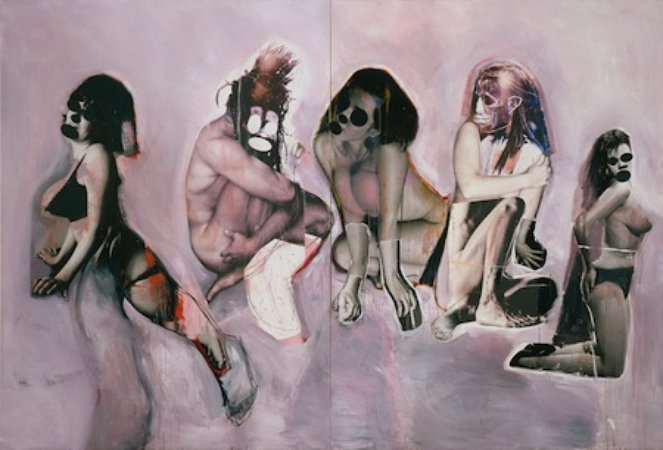
is fair use of these:
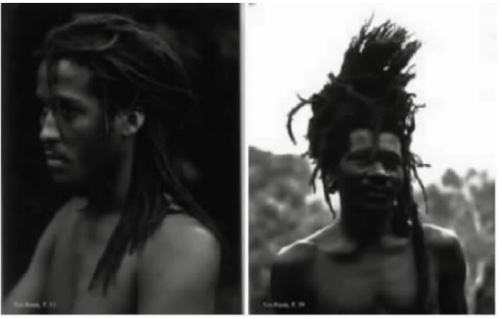
but, these:
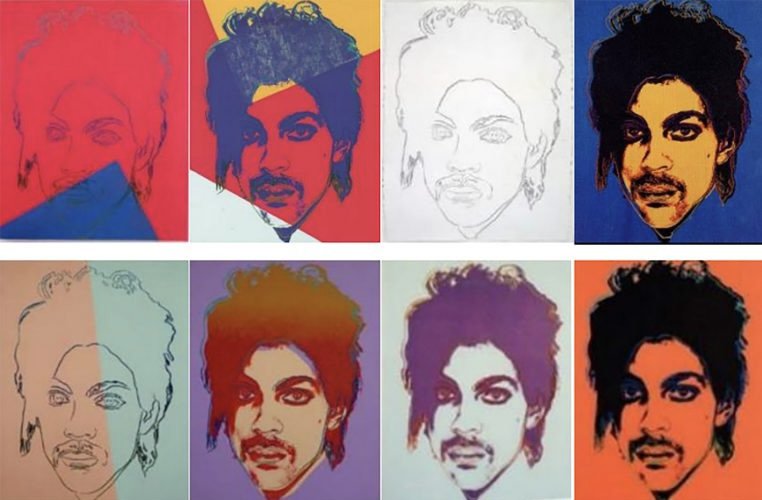
which incorporate this,
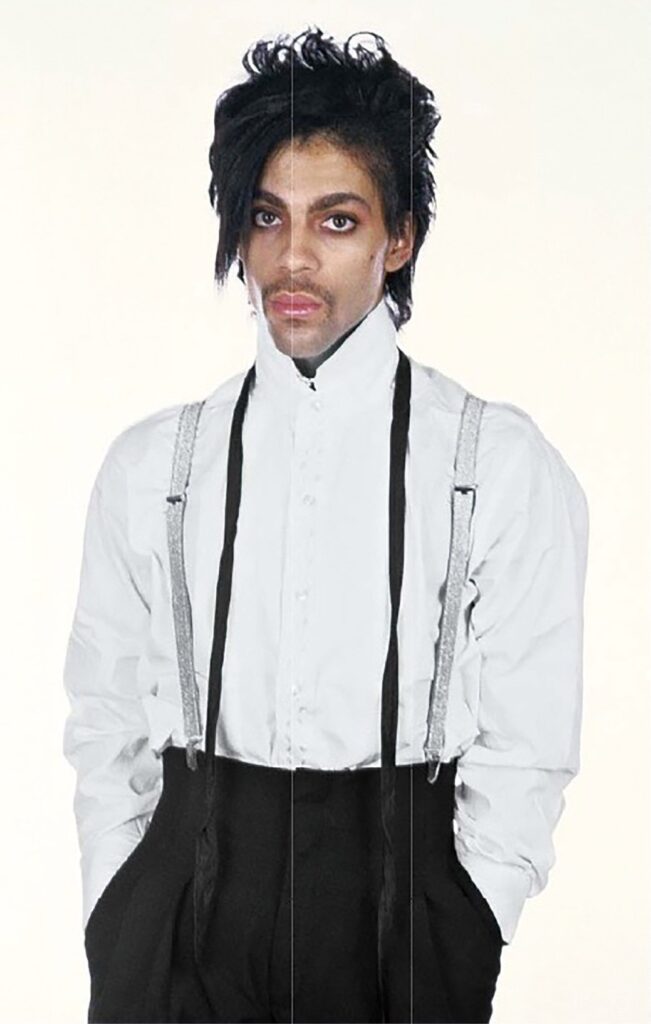
are not.
The first set of images comes from Cariou v. Prince, a case in which photographer Patrick Cariou sued “appropriation” artist Richard Prince over 30 artworks Prince created that included elements of Cariou’s photos of Rastafarians. The Southern District of New York ruled in favor of Cariou, holding that Prince’s works were not fair use because they didn’t comment on or criticize Cariou’s photos.
The Second Circuit disagreed. It found that the District Court imposed an incorrect legal standard by requiring Prince’s work to comment on Cariou’s work.
Instead, the Second Circuit emphasized that to constitute fair use, the later work must “alter the original with “new expression, meaning or message.” The Second Circuit took this standard from a 1994 Supreme Court case, Campbell v. Acuff-Rose Music, Inc., which involved 2 Live Crew’s adaptation of Roy Orbison’s song “Pretty Woman.” In particular, the Second Circuit held that Prince’s artworks had an “entirely different aesthetic from Cariou’s photographs.” Based on this, the Second Circuit concluded that 25 of Prince’s artworks were sufficiently transformative to constitute fair use (the question of the remaining five works was remanded to the District Court).
In reaching this conclusion, the Second Circuit said that it shouldn’t be read to suggest that any cosmetic changes are enough to mean that something is fair use. Rather, it emphasized the fact that Prince’s images had “a fundamentally different aesthetic” than Cariou’s photos.
While that certainly appears to be true in Cariou, it also may be true in Warhol v. Goldsmith — as the Warhol Foundation has argued — that the Prince Series has a very different aesthetic from Goldsmith’s portrait of Prince. But how do artists (or lawyers or judges) determine how much transformation is enough to put them in the clear? Is it possible to predict how a court will balance the elements that go into a fair use analysis? Is there a way to define or measure exactly how much of a different aesthetic is required? Moreover, when is a secondary use “derivative,” meaning that the original owner controls the right to make additional works, and when is it fair use?
More on this next time.
March 21, 2023
U.S. law has long grappled with when it’s okay to copy someone else’s work. This is a central tension of copyright law, which is supposed to encourage people to create by ensuring they can get paid for their creations while also allowing others to base new works off of existing ones.
These dueling forces are the subject of the legal doctrine of “fair use,” which is at the heart of a case the U.S. Supreme Court will soon decide. The case, Andy Warhol Foundation for the Visual Arts, Inc. v. Goldsmith, is being closely watched by artists, collectors and museums.
Some background: In 1981, Newsweek hired Lynn Goldsmith, a photographer famous for her album covers and work with rock stars, to photograph the up-and-coming R&B artist Prince. Goldsmith kept this unused outtake for future licensing:
By 1984 Prince was a megastar and Goldsmith licensed the photo to Vanity Fair. This license allowed the magazine to hire an artist to create an illustration based on the photo for a feature story. Vanity Fair paid Goldsmith $400 and commissioned Andy Warhol to make the art.
Working from the photo, Warhol created 16 silkscreens, which he copyrighted. Vanity Fair used one for its article. The entire collection became famous in the art world as the Prince Series, and was sold and reproduced for hundreds of millions of dollars.
When Prince died, Condé Nast, which publishes Vanity Fair, paid the Warhol Foundation $10,250 to run one of Warhol’s Prince images on the cover of a tribute issue. The magazine neither credited nor paid Goldsmith.
At that point, Goldsmith learned of the Prince Series and told the Andy Warhol Foundation that the series infringed on her copyright in the photo. The Foundation countered that Warhol had merely used her image of Prince as a building block to create something new: he cropped and resized the original image, changed the tone, lighting and detail, and added colors, shading and outlines over it. The result, according to the Foundation, was a new work that “comments on the manner in which society encounters and consumes celebrity.” The Foundation sued Goldsmith for a declaration of non-infringement or, alternatively, a declaration that the Prince Series constituted fair use. Goldsmith countersued for copyright infringement.
The Federal District Court in Manhattan ruled in favor of the Foundation. It found the Prince Series “transformative” because it communicated a message different from Goldsmith’s original photograph. Thus, according to the District Court, Warhol’s use of Goldsmith’s photo was fair use.
Goldsmith appealed to the Second Circuit which, in August 2021, reversed and found that the Prince Series was “substantially similar” to her original photograph and did not constitute fair use.
In reaching this decision, the Second Circuit reviewed each of the four factors considered in a fair use analysis: the purpose and character of the secondary use; the nature of the copyrighted work; the amount and substantiality of the secondary use; and the impact of the second work on the market for the origins.
The Second Circuit found that the Prince Series was not fair use because both the original photo and the Prince Series share the same purpose — they are both visual art. Moreover, in the Second Circuit’s view, the Prince Series isn’t fair use because it doesn’t obviously comment on or use the original for a different purpose. Rather, the Prince Series merely recast the original work with a new aesthetic.
It also was clearly troubled by the fact that the Prince Series negatively impacted the market for Goldsmith’s original photo and the possible consequences of people avoiding paying artists’ licensing fees by creating stylized derivative images.
As much as the Second Circuit examined how the two works are reasonably perceived, did the fact that Warhol isn’t around to explain his thinking impact the court’s thinking? Maybe, but should this matter?
Perhaps more centrally, how do you figure out what’s a new aesthetic and what’s not? Or, how much of a new aesthetic is necessary to distinguish a work as new?
These are very hard questions to answer and the Supreme Court pushed the parties’ attorneys — especially the Foundation’s attorney — on where to draw the line.
More on how we got here in the next post.
August 11, 2022
The Southern District of Florida recently issued a decision in a case that brands using social media influencers should note. While the decision was not an all out loss for the brand, it did conclude that the brand could be liable if the copyright owner was able to show the brand profited from its social media influencers’ use of copyrighted materials.
By way of background, Universal Music is suing Vital Pharmaceuticals, Inc., which makes an energy drink called Bang, and its owner, Jack Owoc, for copyright infringement. The lawsuit alleges that Bang and Owoc directly infringed on Universal Music’s copyrights with TikTok posts that included Universal Music’s copyrighted music. Universal Music further claims Bang was contributorily and/or vicariously liable for videos posted by social media influencers featuring Bang. In response, Bang and Owoc claimed that the TikTok videos were covered by TikTok’s music licenses and that Bang could not control what its influencers posted to TikTok.
As an introduction (or refresher), direct infringement is where someone uses copyrighted materials that belong to someone else. In contrast, contributory infringement is where someone encourages another to use copyrighted material belonging to a third-party, and vicarious infringement is where a party profits from another’s direct infringement and does not stop that direct infringement.
In support of its claims, Universal Music introduced evidence that Bang encouraged influencers to create and post TikTok videos promoting Bang’s products with Universal Music’s copyrighted works. Universal Music claimed that, because Bang had the power to withhold payment to its influencers, it could control whether influencers used Universal Music’s copyrighted works.
On Universal Music’s motion for summary judgment, the court held that Universal Music established that Bang and Owac directly infringed on its copyrights. Specifically, the court found that Bang and Owac directly copied Universal Music’s copyrighted works.
The court went on to find that Universal Music was not entitled to summary judgment on its claim of contributory infringement as it had not shown that Bang had any input into the music used by its influencers.
The court further concluded that Universal Music established that Bang had sufficient control over its influencers to prevail on a claim of vicarious infringement. Despite this finding, the court denied Universal Music’s motion for summary judgment because Universal Music had not shown that Bang received any financial benefit as a result of its influencers’ posts. As a result, this issue will have to await trial when Universal Music can introduce evidence as to whether Bang benefited.
Despite the fact that this decision was not an all out loss for Bang, brands should definitely keep it in mind when working with influencers.
